Utility tracking best practices come down to a handful of habits done consistently: reading meters on a fixed schedule, organizing them so every number has a home, and checking each bill against your readings before you pay it. Most property managers already track utilities in some form. The difference between tracking that catches a leak in week two and tracking that finds it at the next annual review is rarely the tool. It's the routine around it.
This guide collects 15 practices in three stages—foundation, routine, and verification—followed by a 30-day rollout plan and an honest look at what UtilityControl automates and what still depends on you.
Key Takeaways
- Consistency beats sophistication: a fixed reading schedule and clear naming matter more than any single feature.
- You need at least two meter readings inside a billing period to verify a bill. One reading a month can never do it.
- A one-line note on every unusual reading turns a mysterious chart spike into an answered question months later.
- Reconcile every bill against readings before paying. UtilityControl's consistency check flags bills that differ from your meter data by more than 5%.
- UtilityControl does not send automated anomaly alerts today, so a weekly review with your own thresholds is the practical substitute.
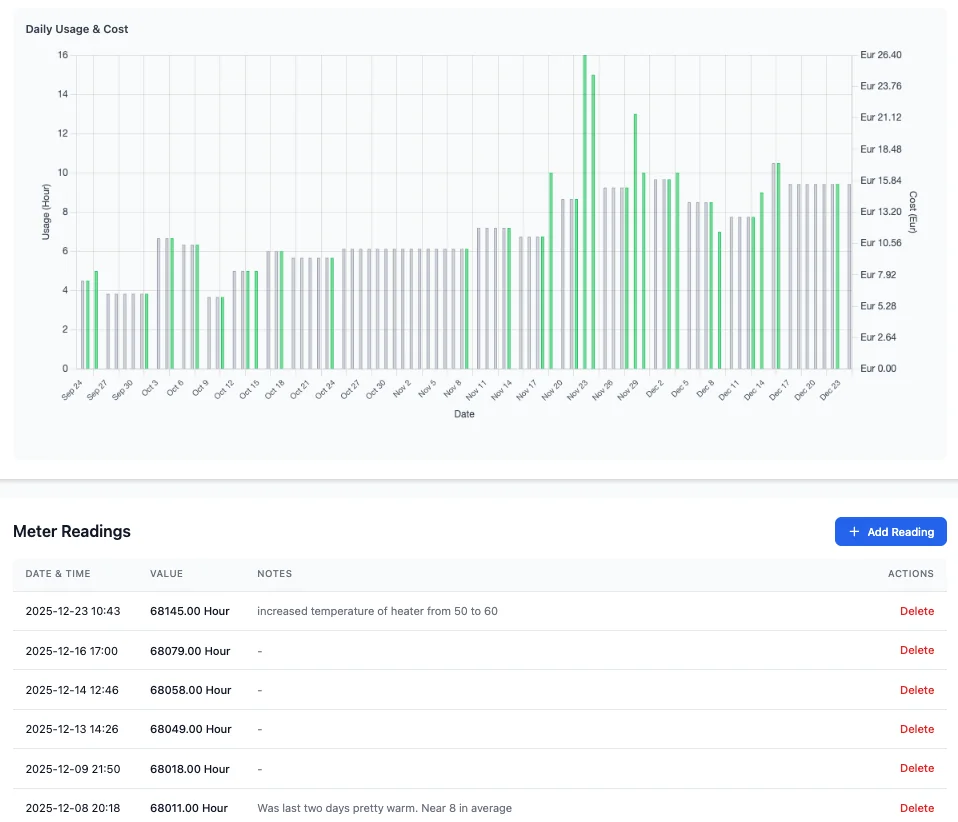
A chart shows what changed; the note on the reading explains why. You need both.
Stage 1: Build the Foundation (Practices 1-5)
These five decisions are made once, early, and they determine how useful every later reading is. Getting them right costs an afternoon. Fixing them after a year of inconsistent data costs far more.
1. Establish a fixed reading schedule
Pick a cadence and hold it. At a minimum, log one reading at the start and one at the end of every billing period. For high-cost meters such as heating or a shared water main, read weekly. This isn't just tidiness: UtilityControl's bill consistency check needs at least two readings inside a bill's period to calculate consumption, so a single monthly reading leaves you unable to verify the bill at all.
2. Organize by location, then by meter
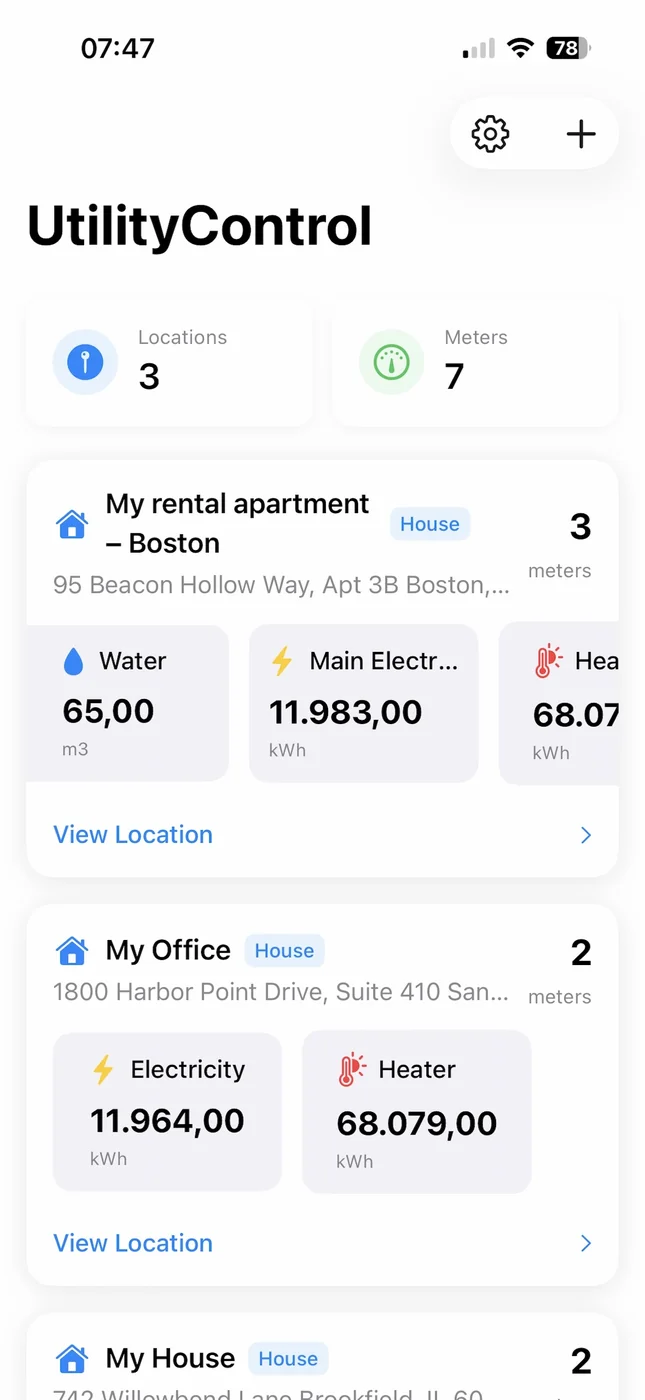
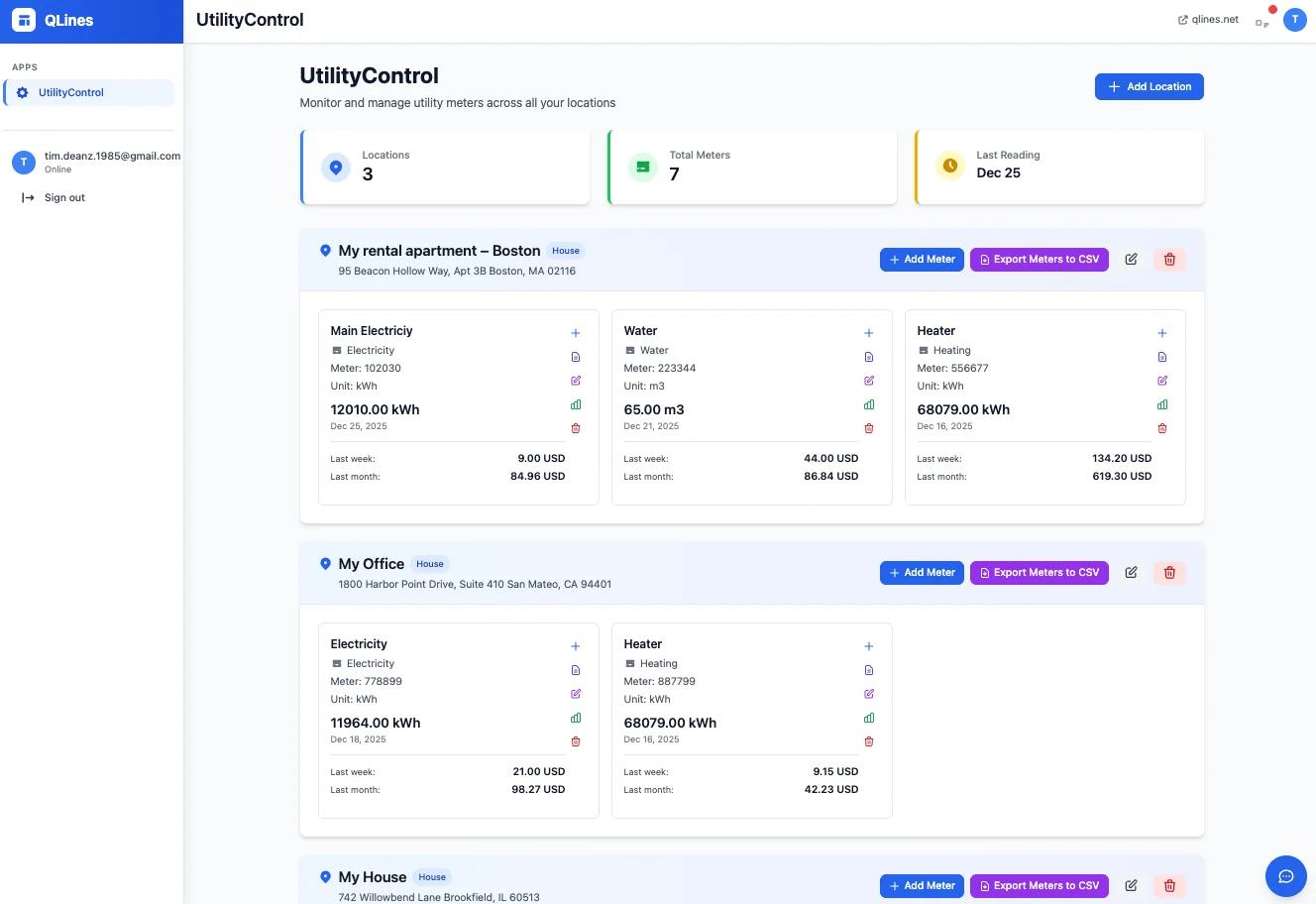
Create one location per building or address, then attach every meter to it. This mirrors how bills arrive and how problems get investigated: "the Boston apartment's water" is a question you can answer in seconds if the data is grouped that way. If you manage several properties, our multi-location setup guide walks through the hierarchy step by step.
3. Track every utility type, not just the expensive one
Electricity, water, gas, and heating each tell part of the story. A drop in one alongside a rise in another can point to a tenant switching heating sources or a meter that stopped registering. Tracking all of them in one place also makes cross-utility comparison possible without opening four portals.
4. Record cost from day one
Set the cost per unit and currency on each meter when you create it, so consumption always translates into money. A chart that says "68 kWh" is informational; a chart that says "€13 this week" gets acted on. When your tariff changes, update the rate and add a dated note so later comparisons aren't misread.
5. Standardize naming conventions
Adopt a pattern and never deviate: Unit or area – utility – purpose. "Unit 3B – Cold Water" is instantly clear to anyone; "Water 2" is a puzzle in six months. Include the meter's serial number in the meter details so a reading can always be matched to the physical device.
Stage 2: Build the Routine (Practices 6-10)
With the foundation in place, these practices keep the data trustworthy and make it useful week to week.
6. Add a note to every reading that isn't routine
Each reading in UtilityControl has an optional free-text notes field, and it is the most underused feature in any tracking setup. "Increased temperature of heater from 50 to 60," "tenant moved out today," "guests for a week," "boiler serviced": any of these turns an unexplained step in the chart into a documented cause. The notes cost ten seconds to write and can save hours of guesswork later.
7. Capture the bill itself, not just the total
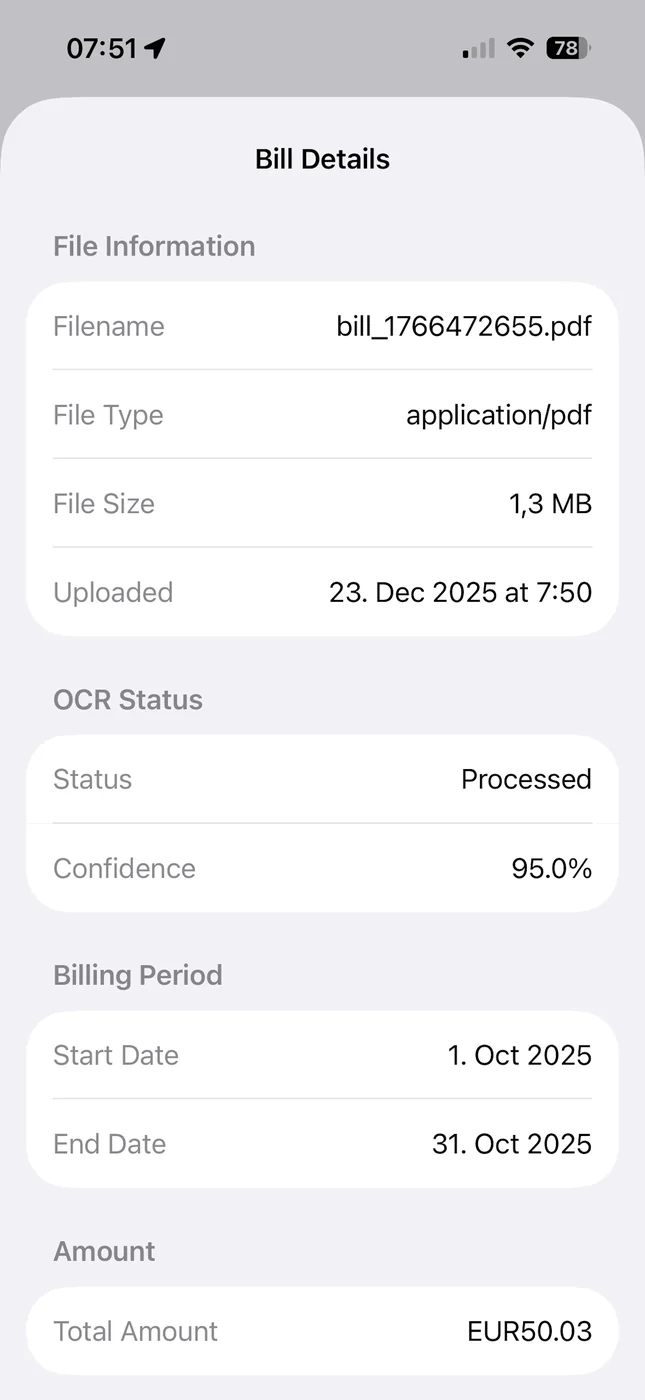
Upload every bill as a photo or PDF rather than retyping figures. UtilityControl's OCR (optical character recognition, software that reads text from images) extracts the billing period, usage, and total amount, and bills it is less sure about (below a 70% confidence threshold) are marked for review. Treat that flag seriously: check the extracted numbers against the paper bill before relying on them.
8. Put a review on the calendar
Data nobody looks at doesn't save money. Block ten minutes weekly to scan the usage charts for steps and spikes, and thirty minutes monthly for a deeper pass across all locations. Recurring calendar entries work better than good intentions.
9. Define your own alert thresholds
UtilityControl doesn't push automated anomaly alerts today, so build the alerting into your weekly review. A workable starting rule: investigate any meter that runs well above its recent average, and any meter in a vacant unit that shows consumption at all. Adjust the thresholds after a couple of months based on what turns out to be noise. The leak detection guide covers what those patterns look like in water and heating data.
10. Keep all your history
Never delete old readings to "clean up." Year-over-year comparison is the single best tool for separating seasonal swings from real problems, and it only works with history. Export a CSV backup periodically; if you're migrating from spreadsheets, our CSV import guide shows how to bring past data in so the history isn't lost.
Stage 3: Verify and Improve (Practices 11-15)
The last five practices are where tracking pays for itself: catching errors, cross-checking, and getting better over time.
11. Reconcile every bill against your readings before paying
This is the highest-value habit on the list. UtilityControl's consistency check compares the usage on a bill to the change in your meter readings over the same period and treats them as consistent when they're within 5%. A larger gap doesn't prove the utility is wrong, but it tells you exactly which bills deserve a closer look. Our guide to detecting and recovering utility bill overpayments covers what to do when a bill fails the check.
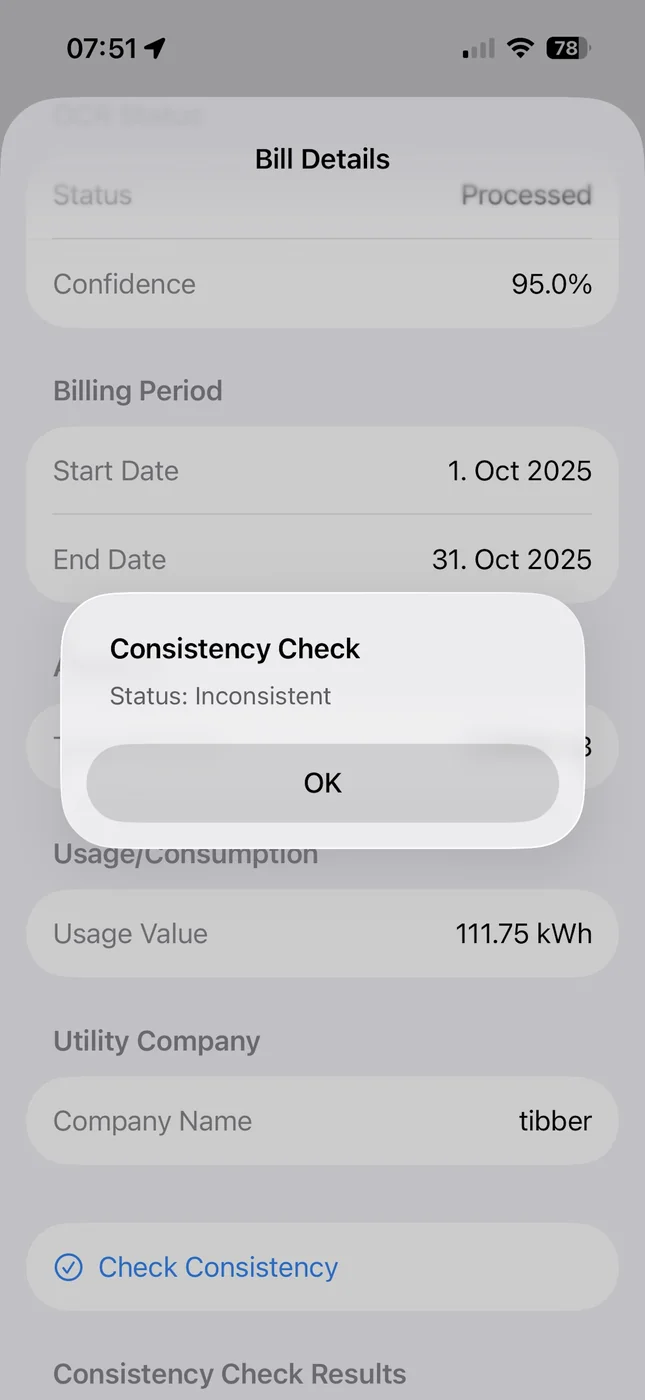
An "Inconsistent" result means the bill and the meter readings disagree: worth checking before you pay.
12. Audit quarterly, not just when something looks wrong
Once a quarter, pick one location and check everything: are readings on schedule, are notes present, do bills match, do sub-meters add up to the main meter where both exist? Rotating through locations keeps the audit small while ensuring nothing goes unexamined for long.
13. Write a one-page procedure and train everyone who touches a meter
Whoever reads meters, whether a caretaker, a tenant, or a colleague, should follow the same steps: which meters, what time, how to write notes, where the photo goes. A single page covering naming, cadence, and note style prevents most data-quality problems at the source.
14. Plan for seasonal variation
Compare this month to the same month last year, not to last month. Heating and cooling loads swing enough that a month-over-month jump in January is normal, while the same jump year over year is a flag. When you build a budget, also sanity-check your tariff against the average retail prices the U.S. Energy Information Administration's Electric Power Monthly publishes by sector and state.
15. Review the process itself every quarter
Ask three questions: what did tracking catch, what took too long, and what did we stop doing? Then adjust. If weekly readings on low-cost meters are never used, drop to monthly there and spend the time on the meters that matter. The goal is a process light enough to survive busy months.
Your 30-Day Rollout Plan
You don't need to do all 15 at once. This sequence builds the foundation first and adds habits as the data accumulates:
| Week | Focus | Practices | Outcome |
|---|---|---|---|
| 1 | Set up locations and meters | 2, 3, 4, 5 | Every meter named, costed, and assigned to a location |
| 2 | Start the reading routine | 1, 6, 10 | First full round of readings with notes; history imported |
| 3 | Add bills and reviews | 7, 8, 9 | Latest bills uploaded; weekly review on the calendar |
| 4 | Verify and document | 11, 13 | First bill reconciliation done; one-page procedure written |
Practices 12, 14, and 15 are quarterly and annual habits, so put them on the calendar now and let them start once you have a full quarter of data.
What UtilityControl Automates (and What It Doesn't)
A best-practices list is only useful if you know which parts a tool does for you. Here is an honest split:
| Practice | UtilityControl today | Still up to you |
|---|---|---|
| Organization & cost tracking (2-5) | Locations, meters, unit, cost per unit, currency | Choosing the naming convention |
| Reading capture (1, 6) | Dated readings with a notes field | Taking the readings on schedule |
| Bill processing (7) | OCR extraction, low-confidence review flag | Reviewing flagged bills |
| Anomaly detection (8, 9) | Usage and cost charts; AI assistant answers from your data | Watching the charts and setting thresholds (no automatic alerts yet) |
| History & backup (10) | CSV import and export | Exporting on a schedule |
| Reconciliation (11, 12) | Bill-versus-readings consistency check (5% tolerance) | Following up on inconsistent bills |
Weighing your options? Our utility tracking apps comparison puts UtilityControl next to the alternatives, and the 10 cost-saving strategies for property managers shows where these habits translate into real money.
The Cost of Skipping the Basics
Small, slow problems are the expensive ones. EPA WaterSense reports that the average family can waste 180 gallons of water a week, about 9,400 gallons a year, to household leaks. Across a portfolio, that is exactly the kind of loss that never appears as a single dramatic bill and only shows up as a slow upward drift, visible only to someone reading meters regularly. For the ownership-side view of why this matters, see why utility tracking matters for rental properties. And if you report building energy use for benchmarking, the ENERGY STAR benchmarking program starts from exactly the kind of clean, dated consumption data these practices produce.
Put these practices to work
UtilityControl gives you the locations, meters, reading notes, bill OCR, and consistency checks behind practices 2 through 11. Start with the free plan and run the 30-day rollout on your own properties.
Explore UtilityControl Start FreeNo credit card required • No hardware needed
Conclusion
Effective utility tracking is a routine, not a project. Set a reading schedule, name things clearly, record cost, annotate the unusual, and reconcile every bill before you pay it. Do those five things and you're ahead of most portfolios. The rest of the list refines the system: reviews on the calendar, your own alert thresholds, seasonal comparisons, and a process you revisit each quarter. Start with the 30-day plan, keep it light enough to survive a busy month, and let the data build. The first inconsistent bill or unexplained spike you catch will more than justify the effort.
Frequently Asked Questions
How often should property managers read utility meters?
At minimum, once at the start and once at the end of every billing period so each bill can be verified against readings. For high-cost or leak-prone meters such as heating and shared water mains, read weekly. More frequent readings shorten the time between a problem starting and you noticing it.
What are the most important utility tracking best practices?
Three matter most: a fixed reading schedule, clear naming so every meter is identifiable, and reconciling each bill against your readings before paying. The other twelve practices in this guide refine and protect those three.
How do I know if a utility bill is wrong?
Compare the usage stated on the bill with the change in your meter readings over the same billing period. UtilityControl's consistency check does this automatically and treats results within 5% as consistent. A larger gap doesn't prove an error, but it identifies which bills to question with the utility.
Does UtilityControl send alerts when usage spikes?
Not automatically today. UtilityControl gives you usage and cost charts, a consistency check for bills, and an AI assistant that answers from your data, but spotting a spike depends on reviewing the charts. Scheduling a weekly ten-minute review with your own thresholds is the recommended substitute.
Do I need smart meters to follow these best practices?
No. Every practice here works with manual readings and photographed bills. Smart meters can add interval data, but they aren't required to get a reliable reading schedule, bill reconciliation, or seasonal comparison. See our smart meters vs. manual reading comparison for when the upgrade makes sense.
How long does it take to set up proper utility tracking?
Expect an afternoon to create locations, meters, and cost settings, and about a month to build the reading, review, and reconciliation routine. The 30-day rollout plan above sequences the practices so you're never doing everything at once.
Should I keep tracking utilities in a spreadsheet?
A spreadsheet can work for one property. It tends to break down as you add locations, because bill reconciliation, notes, and charts all become manual. If you outgrow it, CSV import lets you bring your existing history into dedicated software without starting over.